Monday, May 10, 2010
 Malik Choudhari
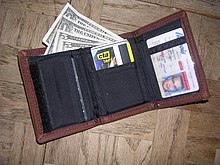
Wikipedia says "A wallet, or billfold, is a small, flat case used to carry personal items such as cash, credit cards, identification documents (driver's license, identification card, club card, etc), photographs, and other paper or laminated cards. Wallets are generally made of leather or fabrics, and they are usually pocket-sized and foldable"
Physical Wallets:
We will carry wallets with us always and it varies from person to person what we carry in it. We cannot go out without our wallets because it has our money, credit cards, identity cards etc. Modern technology has changed our wallets too. The wallets we carry are physical wallets and its history starts from ancient greece.
Then came Digital Wallets:
A digital wallet (also known as an e-wallet) allows users to make electronic commerce transactions quickly and securely.
A digital wallet functions much like a physical wallet. The digital wallet was first conceived as a method of storing various forms of electronic money (e-cash), but with little popularity of such e-cash services, the digital wallet has evolved into a service that provides internet users with a convenient way to store and use online shopping information.
A digital wallet has both a software and information component. The software provides security and encryption for the personal information and for the actual transaction. Typically, digital wallets are stored on the client side and are easily self-maintained and fully compatible with most e-commerce Web sites. A server-side digital wallet, also known as a thin wallet, is one that an organization creates for and about you and maintains on its servers. Server-side digital wallets are gaining popularity among major retailers due to the security, efficiency, and added utility it provides to the end-user, which increases their enjoyment of their overall purchase.
The information component is basically a database of user-inputted information. This information consists of your shipping address, billing address, payment methods (including credit card numbers, expiry dates, and security numbers), and other information.
And we have now mWallets:
mWallet (mobile wallet) is an virtual wallet which works on your mobile. mWallet is like an virtual bank account where you can put money whenever you wish and use it wherever you go and whenever you want. Some mWallets come as a software which needs to be installed on your laptops and some service providers host your wallet on their servers and you can access your wallet through different channels like web, SMS, IVR, USSD etc. Whatever the channel ofaccess may be the functionality remains same.
Are these wallets safe?
Yes, these wallets are more safer than our physical wallets. There is no risk of losing your wallet and hence losing your credit cards and vital documents. You may carry mWallet with your mobile. Imagine you walk into super market and pay your bill by just flashing your mobile! isn't it so easy?
Mobile Money Transfer works on mWallet concept. Many telecom operators are providing this virtual wallet to their subscribers. Subscriber can use this wallet for to remit money, to pay at petrol pump, to pay utility bills just like your credit cards. Whats more you can even put your credit cards/debit cards/ Bank accounts into your mWallet.